Author: spf_qmsrjj

  • Certification of Agricultural Export Products

    Certification of Agricultural Export Products

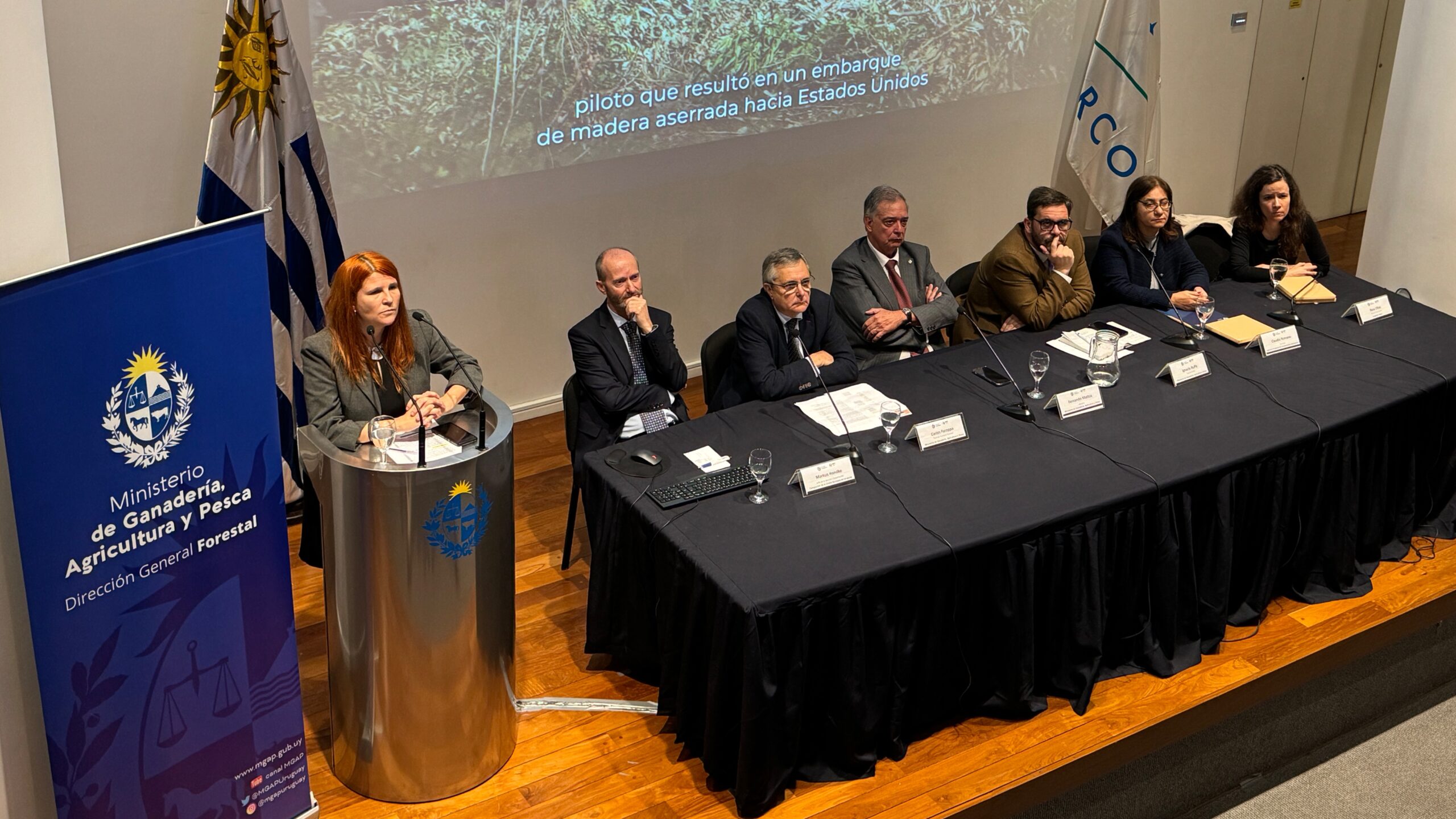
    With the presence of several authorities from the institutions that participated in the cooperation project “Certification of agro-exportable products produced under sustainable management of native forests in Uruguay”, the closing ceremony was held on June 18.

    During the day, presentations were given by the European Union delegate in our country, Markus Handke, the Manager of AUCI, Claudia Romano, the Minister of Livestock, Agriculture and Fisheries, Fernando Mattos and the Forestry Director, Carlos Faroppa, among others.

    This activity is part of the implementation of Regulation 1115/2023, a European regulation to prevent deforestation.

    Then there were talks where information was provided on the EUDR Regulation, the documents and requirements necessary for the shipment of agricultural export products to the European Union and two pilot export experiences were presented, one from the company Forestal Caja Bancaria and the other from Maderas del Uruguay.

    More details about the event at This link


  • Training in future prospects for the electromobility sector

    Training in future prospects for the electromobility sector

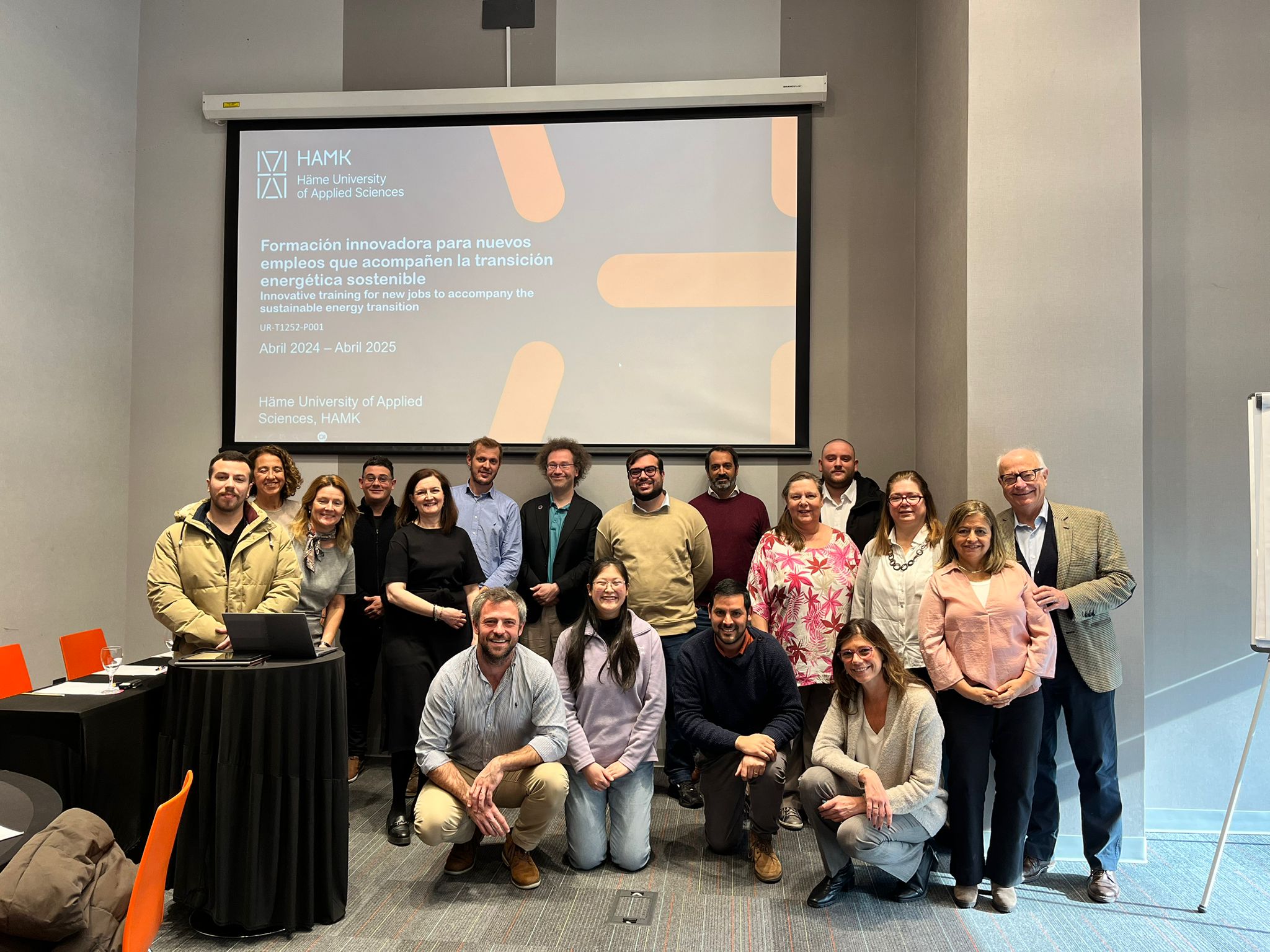
    On Monday, May 20, the SPF attended one of the working sessions within the framework of the project carried out by Hamk University for training in foresight for new jobs that accompany the sustainable energy transition.

    Both the SPF and members of the IDB shared their perspectives after participating in the Forest Foresight course. For both institutions, training is a fundamental pillar in the development of individuals and, consequently, in the development of their respective sectors.

    It is essential that this training fosters an exchange between the business and education sectors, with each contributing their experience and expertise on the subject. That is why the SPF supports these initiatives.

  • SPF STATEMENT on rural roads

    SPF STATEMENT on rural roads

    The Forestry Producers Association shares the concern regarding the state of rural roads, which led the government to declare a national road emergency. Unfortunately, in recent days we have witnessed the Paysandú Municipality’s arbitrary stance toward the forestry sector regarding road use. The condition of roads and national highways is an issue that affects all agricultural production without exception and requires solutions that address everyone’s needs.

    In 2023, the member companies of the Forestry Producers Association operating in Paysandú and the Paysandú Departmental Government agreed on a framework for collaboration to improve the coordination and monitoring of forestry transport activities, as well as the maintenance work already being carried out by the companies on rural roads. Specific agreements were also reached for improvements to certain sections of the main road corridors, with the necessary investment from the forestry companies. To date, the commitments made by the forestry companies have been fulfilled.

    It is worth noting that, of the total road network in the department of Paysandú, less than 15% are used annually by forestry companies, which shows the importance of seeking a comprehensive solution for the entire agricultural sector.

    We understand that the possible application of restrictive regulations without clear criteria and that would apply to a single productive sector would not solve the structural problems and would harm a thriving sector that generates thousands of permanent jobs, invests very important amounts in roads and is a decisive contribution to the country’s economy.

    We hope the departmental government understands the potential impact of this regulation on the agroforestry production chain. We trust in dialogue and the search for solutions that provide predictability for everyone, and that we can continue working together for the development of the department and its people.

  • End of the 2023-2024 season

    End of the 2023-2024 season

    On March 31, another summer season of O-PAIF came to an end, with the demobilization of the response with Heliborne Brigades and fighter jets.

    Regardless of this fact, monitoring continues through cameras that cover 74% of the protected properties, and the management of reported outbreaks (with notification and follow-up), from the Monitoring and Dispatch Center (CMD) located in Durazno.

    It was a summer completely different from previous ones, with a significant proportion of days with zero or slight risk, which, although they did not produce a reduction in the smoke detected, did impact the number of dispatches and hours dedicated to combating it, which had a drastic drop when compared to the two previous summers, and even to the average of the 10 seasons with national coverage.

    In that sense, and only referring to the previous season and the air assets, there was a drop to a third in the number of dispatches, to an eighth in terms of combat hours and less than half the time spent in each field operation.

    Even more drastic was the reduction of the burned area, with 15.4 hectares of protected land affected, while less than 5 hectares of plantations suffered any damage from fire.

    The major milestones of the season were the expansion to 60 of the number of detection cameras, and the change in the management of the CMD, including a reconfiguration of it that allowed the increase of workstations, improvements in equipment and network work, both internal and remote access.

    There were adjustments to the work and dispatch protocols, as well as an update to the software that unites cartographic, climatic and risk information on a single platform, with the availability of both common and company resources, which can be dispatched to address hotspots.

    More than 120 people of 3 nationalities, including DNB staff, are collaborating to prevent fires from affecting the forests of the more than 100 companies that spend more than USD 4,600,000, in pursuit of that goal.

    Additionally, last season, an investment of more than USD 1,000,000 was needed to install support infrastructure for cameras and communication equipment.

    In the previous summer (much more severe), the cost was similar, which shows that it is necessary to prepare for the worst circumstances, and that, after the hot season has begun, there is little flexibility to either reduce or increase resources.

    An evaluation phase of the past campaign began in April, involving all stakeholders, with the aim of improving and adjusting the response for the next season, in the three main areas of action: prevention, detection and combat.

  • Forestry, economy and environment

    Forestry, economy and environment

    November 13, 2023

    CERES Consulting presented a report on the multiplier effect of the forestry sector

    Source: Rural El País


    According to a study carried out by the Center for Studies of Economic and Social Reality (Ceres), the solid growth of forestry industry In Uruguay, over time, the forestry industry not only generates a greater multiplier effect than other sectors of economic activity, but also reflects a commitment to the protection and care of the environment

    These achievements cannot be explained without the stability of appropriate public policies, according to this special report by the executive director of Ceres, the Dr. in Economics Ignacio Munyo, presented last Wednesday at the World Trade Center Auditorium as part of the Forestry Breakfast, organized by the Society of Forest Producers (SPF).

    The work, entitled “Forestry production in Uruguay: a leading and sustainable sector”, It reveals that the country’s institutional stability and legal guarantees have been the pillars of the sector’s boom, fundamental factors for attracting long-term investments.

    Also noteworthy is the implementation of favorable tax policies at the beginning that have boosted productive development and have been supported by governments of different political orientations, only to be withdrawn later in the case of plantations destined for cellulose, according to their growth.

    Currently, plantations destined for the pulp industry, the main component of forestry, receive tax treatment comparable to other primary activities.

    The study also addresses the development of the forestry industry, based on a comprehensive analysis of the results and projections of aspects such as activity, exports, and job creation, as well as its significant role in multiple facets of the economy. State policies geared toward this relatively new sector of the production matrix, along with the availability of suitable land for tree plantations, form the foundation for sustainable growth.

    In turn, forestry activity generates jobs with a lower risk of automation than employment in the rest of the economy.

    The forestry industry is not only a relevant sector, but also represents a positive paradigm of the circular economy, which implies that its development approach contributes significantly to reducing resource waste and minimizing waste generation.

    This translates into promoting the reuse, repair, recycling, and renewal of products and materials, fostering the creation of a continuous cycle in which resources and products are kept in use for as long as possible.

    Environment. From the perspective of global warming, its key role in reducing net carbon emissions is highlighted. Furthermore, the report maintains that the environmental impact is significantly controlled through compliance with international certifications, regulations from the Ministries of Livestock, Agriculture, and Fisheries, and the Environment, which guarantee adequate oversight, in addition to widespread adherence to the National Code of Good Forestry Practices.

    The forestry sector is one of the country’s main export sectors, accounting for almost one out of every five dollars of Uruguay’s export earnings. Its growth has been steady in recent decades, and with increased investment and the construction of three large pulp mills, the forestry sector is poised to become the country’s leading export.

    The country’s institutional and legal stability, along with supportive policies that transcended government terms, were key to the development of the industry and set Uruguay apart as an investment destination in this sector. These incentives, crucial at the outset, were gradually phased out in the primary pulp and paper phase, in line with the sector’s growth.

    Currently, forestry producers for this purpose face a tax burden comparable to other primary activities, in relation to the income they generate.

    In 2022, the sector as a whole was the country’s second largest exporter, but it is poised to become the first during 2024, when UPM’s second pulp mill reaches peak production.

    The study reaches conclusions of great relevance for development, highlighting that forestry generates significant production chains and has a greater multiplier effect than other sectors of activity.

    The ruling states that, with strong international demand and increased investment in the sector, the forestry industry is positioned as a powerful driver for the development of the Uruguayan economy.

    A Sustainable Engine

    Forestry enjoys strong external demand. For this reason, and because it supports productive decentralization, has a multiplier effect on the economy, and generates jobs with a lower risk of automation, the forestry sector is a powerful engine capable of sustainably driving a new cycle of growth for the Uruguayan economy


  • Investment of US$5.5 million and 60 forest fire cameras

    Investment of US$5.5 million and 60 forest fire cameras

    November 7, 2023

    Source: El Telégrafo


    From December 4th until March 31st, 2024, the 2023-2024 Forest Fire Protection Operation will be carried out, with continuous monitoring through 60 smart cameras and a total estimated cost of approximately US$5.5 million. This was announced to EL TELEGRAFO by Rafael Sosa, coordinator of the fire prevention plan for the Society of Forest Producers (SPF), who highlighted the quadrupling of the number of installed smart cameras as the main difference compared to last year’s plan. The number has increased from 15 along the country’s coast—in the previous season—to a total of 60, extending to other areas and significantly expanding the coverage area. “Three more will be added along the coast to cover the entire area of ​​Paysandú, Río Negro, and northern Soriano,” he specified “They will also cover the departments of Rivera, Tacuarembó, and the southern part of Río Negro, all of Durazno, Cerro Largo, and the northern part of Treinta y Tres,” he added. “There will be 60 cameras in total,” which will be “monitored from the Monitoring and Dispatch Center in Durazno, and the southern zone, including the entire southeast and southwest, will continue to be monitored by aircraft, as before,” he explained.

    Through these 60 cameras, it is estimated that coverage will reach around 60% of protected forests in the forest area, he commented.

    Although now “some of the cameras are detecting and informing the forestry industries” so that they can take measures, the operation in everything that includes “the combat response, the helicopters with the heliborne brigades, (from) the three bases –located in Varela, Tacuarembó and Andresito– and there the complete deployment, begins on December 4 and in principle until March 31 of next year, unless things get very complicated it can be extended for another week,” he explained.

    Looking ahead to the 2023-2024 season, he added, “We also made some improvements to the software we use to manage the entire emergency. The fire management system has new software—which received a global award for its features, winning the Special Achievement Award in Geographic Information Systems at the 2023 Esri User Conference—and some operational adjustments, but these are things we normally do every year, fine-tuning the things we believe need improvement.”

    Regarding the investment involved, he explained that “the operating cost is around four to four and a half million dollars. Then this year, with the installation of the cameras, it took almost another million dollars to invest in fixed infrastructure.”
    “In total, the companies will mobilize about five and a half million dollars to get the operation up and running,” he concluded.

  • LATIN AMERICAN AGRICULTURAL AVIATION CONGRESS 2023

    LATIN AMERICAN AGRICULTURAL AVIATION CONGRESS 2023

    September 26

    During the 2023 Latin American Agricultural Aviation Congress, organized by ANEPA (National Association of Private Agricultural Aviation Companies), in Termas del Arapey from August 16 to 18, a day of reflection, analysis and continuous improvement of forest fire fighting activity was held

    The event included participation from SINAE (National Emergency System), the National Fire Department, the Air Force (DINACIA), Naval Aviation, the Forestry Producers Society, Montes del Plata, UPM, and, of course, ANEPA (National Association of Forestry Producers). The discussions focused on the evolution of forest fire suppression in Uruguay, the organization of the emergency response system, the unified command system, and simulation exercises.

    The various work protocol systems were presented, both individually and collectively, for which operations were carried out since the major fires of 2021-2022 in order to anticipate and improve activities with a greater number of available agricultural aircraft.

    Analyzing the changes implemented since then and the collaborative efforts, previous fire prevention activities were reviewed. The firefighting efforts carried out during the 2022-2023 season and the success achieved were evaluated, particularly in the coastal area, where the efficiency and effectiveness of using agricultural aircraft in fighting forest fires were evident.

    It is not yet possible to quantitatively assess the achievements, due to the nature of the combat, which is fast and highly effective, and which, together with the early detection systems, prevented the fires from spreading.

    ANEPA continues to constantly evaluate and train its companies and pilots, bringing advanced technology and perfecting what is here, every day of the year throughout the country, with a unique fleet of more than 100 aircraft.

    The challenge is to continue working as a team and improving together every day.

  • VISIT TO THE PLANT PROTECTION CONSORTIUM OF CHILE

    VISIT TO THE PLANT PROTECTION CONSORTIUM OF CHILE

    September 8, 2023

    From September 4 to 7, members of the SPF Health Commission visited the Chilean Plant Protection Consortium (CPF). The delegation also included the head of the local biocontrol production service, with which an agreement was signed earlier this year.

    The visit proved very fruitful, with particular emphasis on the hospitality of all CPF staff, from management to field and laboratory personnel, where the techniques used for rearing parasitoids of interest, such as Anaphes nitens, were demonstrated. A detailed overview was also provided of CPF’s role within the business community and its implications for Chilean forest health management.

  • 2020 CHALLENGES AND OPPORTUNITIES OF TOMORROW

    2020 CHALLENGES AND OPPORTUNITIES OF TOMORROW

    July 29, 2019

    Event August 20 at the Radisson Victoria Plaza Hotel

  • LIVESTOCK HEALTH IN FOREST AREAS

    LIVESTOCK HEALTH IN FOREST AREAS

    September 18, 2023

    As part of Expo Prado 2023, the SPF organized a talk for different stakeholders involved in livestock and forestry activities to discuss the challenges of livestock health on forest lands

    As representatives of the Ministry of Livestock, Agriculture and Fisheries, Drs. Ximena Gómez and Marcelo Cortés focused their presentation on the tick control campaign, discussing the current regulatory framework, the epidemiological situation and its evolution at the national level, field work and key measures and points for the control of the parasite.

    They highlighted the significant level of resistance to various active ingredients that has been detected, the importance of understanding the biological cycle and persistence of eggs and larvae in pasture, and various management measures that should be observed to achieve success in combating the pest, both in forest and non-forest areas.

    Agricultural Engineer Nicolás Barú and Dr. Gonzalo Pereyra (from the company CONSUR) spoke about their experiences in the management of livestock systems associated with forestry, in different areas of the country, with different types of plantations and with different health statuses.

    From their experience of more than 20 years developing livestock production on forest lands with different species and production objectives, they highlighted the particularities, advantages, disadvantages and myths that surround this modality.

    Advantages mentioned included the availability of shade for livestock (relevant in summer), greater water availability per head due to managing a smaller allocation than in a field without trees, good perimeter fencing, and better access to machinery and infrastructure than in other areas without plantations.

    They recognized as an asset the long-term relationships established with the owners of the forest plantations, and the propensity to comply with standards and protocols aimed at environmental protection and sustainability.

    They also discussed what they consider relative weaknesses, which they listed as: weed infestation and a tendency towards more fibrous plant species, generally poorly maintained livestock facilities, difficulties in keeping paddocks closed in some situations (planting, harvesting and transport), greater difficulties in moving and gathering herds, decreased weaning percentages, increased percentage of bulls needed and risks of poisoning by Bocopa, which in addition to possible losses due to mortality, generates a problem of lack of grazing options.

    They dismissed as myths the comments that attribute less interest in animal welfare to producers who raise livestock in forested areas. According to them, anyone who owns livestock (on any land) strives to make the best possible profit, and therefore does not neglect their animals. Because of this, they do not believe there is any disregard for sanitary regulations, as that would contradict the intended objective.

    Livestock farming on forest lands is not the source of health problems; rather, the problems are those that generally exist in the different areas, and although there are relatively long periods (at the beginning of the plantation, or post-harvest), when there is no livestock, the problems reappear when the livestock is reintroduced.

    They highlighted that there is a great diversity of forest properties, that there are some costs and risks that increase due to the difficulties of traveling and gathering livestock, and considered it very important to evaluate the conditions of each property prior to entering.

    The last speaker at the conference was Eng. Marcelo Ginella from UPM, who presented his vision from the side of companies that provide grazing to different producers and companies, generally neighbors of their properties.

    He emphasized the importance of viewing the business from the angle of complementarity, based on open communication and in pursuit of similar goals.

    With the livestock producer at the center, he considered that all actors involved, both public and private, must work to achieve the proposed objectives in the fastest and most satisfactory way possible for all.

    At the start of this day, the Forest Fire Protection Operation (O-PAIF) made a series of points regarding the importance of preventing forest fires, events with serious consequences for both forests and livestock (due to the elimination of forage).